
Who Doesn’t Have Childhood Emotional Neglect Symptoms?

Childhood Emotional Neglect (CEN) is evident in most clients I work with at Anglia Counselling, who present themselves for counselling and therapy.

There remains for others a misconception that CEN must be that the experience of obvious and overt abuse and trauma has occurred, and while these do fall into ‘neglect’ or abuse category, there are many more subtle examples, the symptoms of which can remain hidden from our conscious awareness for decades.


It is common for symptoms to only become more obvious once we embark on deep relationships – and then if we ourselves become parents.


So, who does not have any symptoms of neglect from childhood?

Very, very few humans have no symptoms at all.


So, what can be classed as childhood developmental neglect that leads to at least some level of psychological injury? Here are a few:

  • Failing to attend to the infant and toddler when crying or otherwise distressed.
  • Abandonment, temporary or permanent (attachment issues in later life, such as infidelity or difficulty committing).
  • Not being ‘seen’, heard, or believed (Healthy attunement may be missing from ruptures with caregivers, especially when the child is shamed by unrealistic expectations, and most commonly today, with the newly acquired digital ‘soother’ that keeps the child occupied but without eye-to-eye contact that is crucial for healthy esteem and connection to others and oneself.)
  • Uncertainty in the environment due to hostile relationships, anger, or inconsistent caregiver behaviours as seen in domestic abuse and violence.
  • Parents and caregivers who put their own needs before the children.
  • Parents and caregivers who are too busy.
  • When a family member needs more care and attention than others, such as with long term illness or disability of a sibling.
  • Poverty may or may not impact depending on whether love, attention and connection remain available.
  • Overly protective parenting (Helicopter Parenting).
  • Narcissistic parent or caregiver.
  • Alcoholism and substance abuse, other addictions such as gambling and porn.
  • When the child is bought-off with material possessions.

And there are many more developmental stage experiences that will ultimately shape the adult that the child becomes – and the relationships, including parenting styles, they have.

Who is to Blame?

It’s usually unhelpful to blame our parents and caregivers. They did the best with what they had in their awareness, usually repeating a transference via a culture of parenting that may well have been passed down the ancestral line for countless generations, until a ‘chain-breaker’ intervenes and with awareness and counsel, passes on to their own offspring a new, more mindful, less emotionally neglectful experience from which to enter adulthood, relationships, and parenting with.

*We always welcome working with clients who are planning to become parents and who have become aware that they themselves would rather avoid passing on negative approaches, including ‘over-parenting’.  
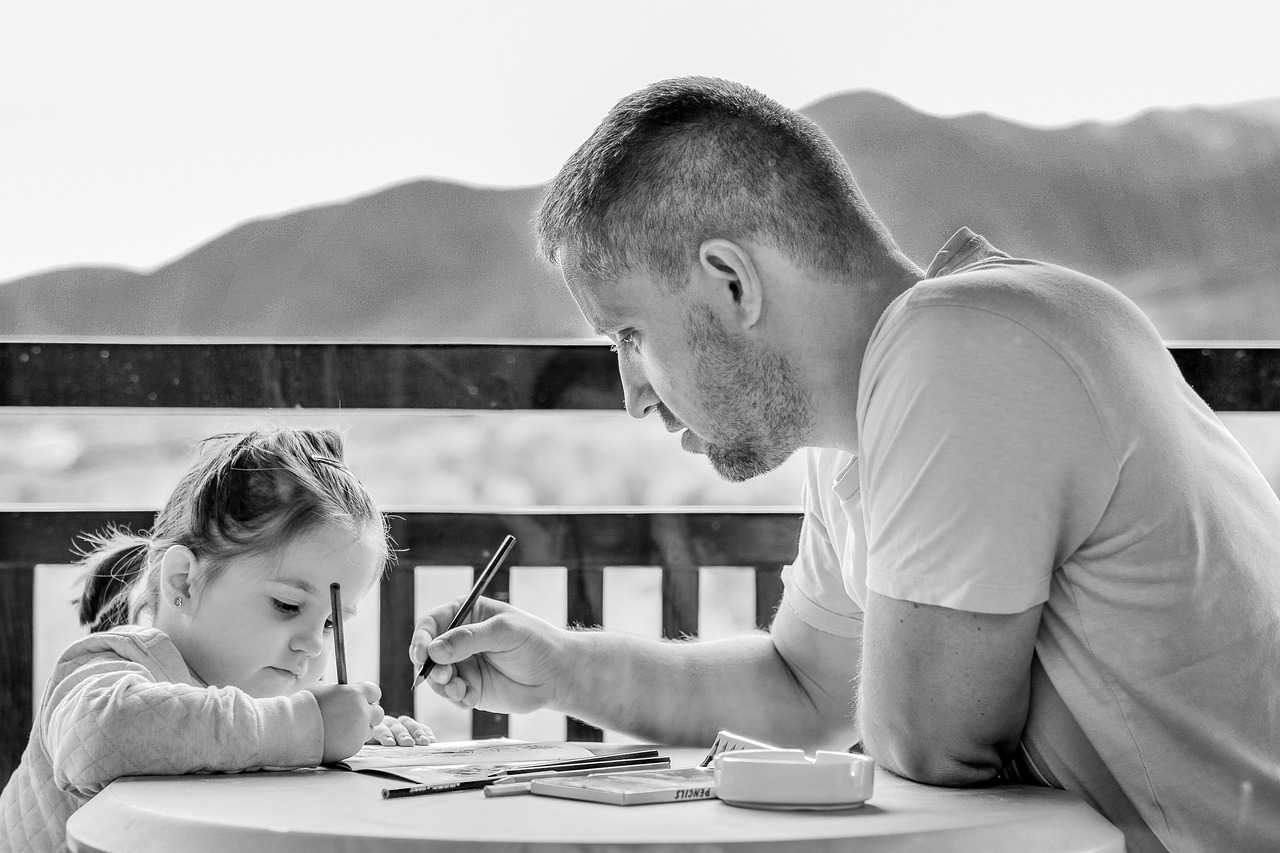
 

The roots of anxiety and depression in adulthood are often to be found in the child’s formative years while the nervous system was still being developed.


The natural way a child’s underdeveloped nervous system regulates is through relationships. The unnatural way is to regulate on its own which is the source of trauma.

When a parent or caregiver is unavailable for regulation and emotional support or when the parent or caregiver is the primary source of physical or emotional distress, the nervous system of the child is “pushed” to find strategies to regulate on its own and make the pain less painful.

Without emotional and biological support (co-regulation), the child’s brain learns: “I have to do it on my own

The way to regulate on its own is via survival adaptations, responses and mechanisms that substitute for the co-regulation. It will become hyper-aroused, hyper-alert, disconnect, tense, freeze or shut down.

Walls Built That Can’t be Seen

Protective emotional barriers, or ‘walls’ are unconsciously created to try and protect the individual from further emotional pain. But these ‘walls’ also fail to allow us in adulthood to ‘feel’ the love of another.

The adult will also have learned through life to move pain into a problem-solving intellectual brain to solve, practically, an emotional problem. The result of this is a disconnection between the mind and body, leaving emotions to become subconsciously stored in the body while ‘we live in the brain’. Not only is this a safety behaviour, but it also has the effect of emotions with nowhere to go; no completion or catharsis, then we as adults become more and more distressed, affecting behaviourally our relationships with ourselves and others, our social and professional performance, our familial and domestic relationships.

We turn to numbing behaviours associated with alcohol or other substances, or allow anger and coercion, manipulation, and distrust, to affect many facets of our lived experience.

The Child Needs to Have Been Seen, Heard, and Believed!

Put simply, the child that learns there is value, and it is safe to express herself will continue to do so in adulthood. In this expressiveness she will be more able to set healthy boundaries, will have raised self-esteem, and be able to regulate her emotions so they do not lead to ill health and the assortment of other turbulence mentioned above.


Resources

Jonice Webb, PhD, author of “Running on Empty” and her website which contains a ‘self-assessment questionnaire’ for Childhood Emotional Neglect.

The book I wish my parents had read” – Philippa Perry

Autumn Can Be a Beautiful Time

At Anglia Counselling we offer support to those experiencing the menopause and who may be struggling with both the physical and emotional symptoms. In this post, we share insight and thoughts about menopause and how it can, for some, be the harbinger of positive new beginnings.


When we really, really don’t want something, finding acceptance for it can be very hard. It’s even harder to go the next step and embrace that thing we don’t want. [Read more…]

Ways to Relax in Tough Times

Does anyone in the room right now feel a little stressed? Stress is the key factor that leads to the development of nerves, overload, or anxiety. A short guest author post for your consideration.


As the majority of the world remains quarantined today, I am writing this while confined to my home. I don’t know what else to call it if this isn’t a period of increased tension and anxiety. I keep my family in my house without knowing what the future holds because I care about the wellbeing of my neighbourhood. Being unable to control my movements and daily activities, as well as being inundated with sickness and uncertainties. So, here are some helpful tips to reduce anxiety:

1. Self-Awareness

Realizing oneself as a unique personality or entity is what is meant by self-awareness. I like to see self-awareness as a goddess or ghost that is sort of floating outside of my body and is able to view my existence from a different angle. You can maintain a more level-headed view of our circumstances when you can distance yourself from the irrational notions that constantly race through your mind. Watching oneself, so to speak, “jump into the trenches” as opposed to actually jumping into the trenches with your thoughts, is very different.

I have a fresh sense of objectivity when I visualize myself as a goddess hovering outside of my body and observing my existence. Here, objectivity is crucial. Being more objective enables us to think more clearly and extricate ourselves from a flood of unproductive feelings like anxiety, tension, and sadness.

The capacity to examine oneself and evaluate one’s ideas, emotions, and behaviour is known as self-awareness. There may or may not be alignment in these three areas of your life. We go out of harmony when we dive deeply into our worries and concerns.

The capacity to control your emotions and make decisions that are consistent with your ideals comes with self-awareness.

2. Breathe

Breathing quickly and shallowly is a common symptom of anxiety and anger. According to Dehorty, this communicates with your brain and creates a positive feedback loop that reinforces your fight-or-flight reaction. Because of this, taking several slow, deep breaths can break the cycle and promote relaxation.

To calm down, try one of the many breathing exercises available. Three-part breathing is one. You must inhale deeply and then fully exhale while paying close attention to your body when practicing three-part breathing.

3. Acknowledge Your Anxiety

Embrace the ability to express your anger or anxiety. The worry and anger you’re feeling might lessen after you give them names and give yourself permission to express them.

4. Meditate

Although I’m not an expert at meditation, I have given it a shot and have found it to be a potent stress-relieving method. Personally, I find the Headspace app to be a great tool for meditation. I enjoy having some direction from the mobile app as I’m just starting out with meditation. Though there are many free materials available as well, I’m now focusing on the commercial services that the app offers.

Additionally, there is a vast universe of meditation to explore. In the more conventional sense, I imagine meditation to involve finding a peaceful, comfortable place to sit, relaxing my body, closing my eyes, and attempting to quiet my mind of its constant chatter.

The goal of meditation is to calm the mind and bring your thoughts and awareness of the current moment. Being mindful of your thoughts as they go through your brain is more important than trying to stop them from occurring.

I’m starting to see that there are many different ways we can do this. I now make an effort to see various daily routines as chances to practice mindfulness and express gratitude. For example, I might go gardening, follow a morning or evening routine, stroll around the block, water my houseplants, stretch, paint, make crafts, or perform some yoga positions.

Try meditation to help you relax during stressful moments; there are so many other approaches besides the standard one!

5. Shift your attention

Move away from the scenario, turn your head in another direction, leave the room, or go outside.

To give you time to make smarter decisions, Dehorty advises doing this practice. “When we are stressed or angry, we focus primarily on how to survive. This is acceptable if our lives are truly in danger, but if not, we want to use our best judgment rather than our natural instincts for survival,” he continues.

6. Relax

Your entire body may seem tense when you’re anxious or irritated. Progressive muscle relaxation exercises might assist you in calming down and finding your core.

Lay on the ground and spread your arms at your sides to perform this. Make sure your hands are not fisted and your feet are not crossed. Begin by telling yourself to release your toes. As you slowly ascend your body, tell yourself to let go of each body part until you reach your head.

Conclusion

Even though dealing with anxiety can seem like an uphill struggle on some days, developing effective coping mechanisms requires learning what to avoid.

Breaking the cycle that anxiety can cause by avoiding triggers, withdrawing from people, hiding your discomfort, and abstaining from vices will be helpful.

Healthy coping techniques can be taught to you by a counsellor so that anxiety will no longer dominate your life but will instead become a symptom you deal with.

Remember that many people are experience nervousness, which is entirely normal. Gaining control over your anxiety or letting it have a detrimental impact on your life depends on learning appropriate coping mechanisms.

Do I Have ADHD?

With an ever-growing awareness and use of the term ADHD there is an increase in individuals questioning ‘if’ they might have some of the associated traits, and whether those traits are impacting on workplace productivity and their relationships at home. [Read more…]

10 Tips for Dealing with a Narcissistic Personality

This guest post, sponsored by An Epic Series of Failures Series some very interesting information around NPD.


The term “narcissist” typically refers to someone who is both self-absorbed and emotionally distant. Narcissistic personality disorder (NPD) is a serious mental illness after all, and should be diagnosed by a trained mental health professional.

Some narcissistic traits can be displayed without the presence of NPD. A few examples of them are:

  • being in continual need of adulation
  • using other people for your own benefit
  • lack of awareness or consideration for the needs of others

[Read more…]

Describing Emotions: A guide to understanding yourself and others

Do you know how to describe your emotions? Can you put words to the way you feel when you’re angry, sad, or happy? If not, don’t worry – you’re not alone. Many people find it difficult to articulate their feelings.

In this article, we will explore the different ways that people describe emotions. We will also discuss the benefits of understanding your own emotions and the emotions of others. At the foot of this post are some invaluable links to resources that can further inform all who wish to feel better, and who want to navigate life with greater peace. [Read more…]

Childhood Emotional Neglect: Is it time to reclaim your ‘self’?

Here we look into childhood emotional neglect (CEN) and the experiences we may have and how to identify if it’s time to reclaim ourselves.


Receiving the message, in childhood, that your feelings don’t matter (in whichever way this message was relayed), can lead to an adulthood of being unable to connect with your ‘self’, others and the world around you. When our emotional experiences are dismissed, ignored or simply not encouraged during childhood, we intuitively shelve this important part of ourselves. We wall off our feelings, stop believing in them, stop listening to them and, in losing our connection with them, we lose belief in ourselves. [Read more…]

10 Steps to Help Recover from PTSD

There is a growing recognition of PTSD thanks in part to an increase of knowledge and efforts to de-stigmatise mental health challenges. If you are struggling with heightened emotions, and behaviours you regret, do source support from a local therapist who is skilled at The Rewind Technique or Eye Movement Desensitisation and Reprocessing (EMDR). It is important to note, PTSD is not amenable to talking therapy alone. And how long since your trauma was experienced is unimportant as long as it is around or more than 6-weeks! [Read more…]

How to Unwind After a Long and Stressful Day at Work

We thank our guest Kurtis Wilcox for sharing these great tips with us.


Restoring energy inspires a more positive outlook on life, which is no fun for those who are over-worked and suffering from constant stress. This article will help provide easy, gentle, and effective ways to relax and recharge after work for better sleep, brighter mornings and a bigger smile. [Read more…]